Wednesday, August 12, 2009

The Tough Times VS. The Achievements

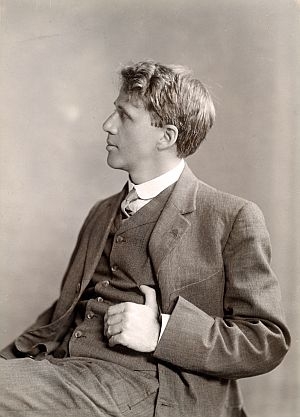
Although Robert Frost was very famous for his poetry, his life was not as great as it may have seemed. Robert Frost's personal life was plagued with grief and loss. His father died of tuberculosis in 1885, when Frost was 11, leaving the family with just $8. Frost's mother died of cancer in 1900. In 1920, Frost had to commit his younger sister, Jeanie, to a mental hospital, where she died nine years later. Mental illness apparently ran in Frost's family, as both he and his mother suffered from depression, and his daughter Irma was committed to a mental hospital in 1947. Frost's wife, Elinor, also experienced bouts of depression.
Elinor and Robert Frost had six children: son Elliot (1896–1904, died of cholera), daughter Lesley Frost Ballantine (1899–1983), son Carol (1902–1940, committed suicide), daughter Irma (1903–1967), daughter Marjorie (1905–1934, died as a result of puerperal fever after childbirth), and daughter Elinor Bettina (died three days after birth in 1907). Only Lesley and Irma outlived their father. Frost's wife, who had heart problems throughout her life, developed breast cancer in 1937, and died of heart failure in 1938.


On the other hand, Robert Frost had some of the most commended achievements throughout his life. Frost won the first of four Pulitzer Prizes in 1924 for his fourth book, New Hampshire, and followed it with West-Running Brook (1928) and A Further Range (1936), which also won a Pulitzer. The Pulitzer Prize is a U.S. award for achievements in newspaper journalism, literature and musical composition. Frost also made a triumphant return to England in 1957 to receive honorary degrees from Oxford and Cambridge. At colleges and universities he commanded the ears and often hearts of generations of students, and he received so many honorary degrees from the academy that he eventually had the hoods made into a quilt.
Overall, he had a heartbreaking, successful life that was filled with ups and downs but he got through it and touched the lives of so many people with his poetry.


Source Citation:
Pritchard, William H.. "Frost's Life and Careers." Modern American Poetry. Feb 2000. American Council of Learned Societies. 12 Aug 2009 .


"Pulitzer Prize." Wikipedia, The Free Encyclopedia. 8 August 2009 at 01:49 UTC. Wikimedia Foundation, Inc. 12 Aug. 2009.
<
http://en.wikipedia.org/wiki/Pulitzer_Prize>.


"Robert Frost." Wikipedia, The Free Encyclopedia. 18 July 2009 at 18:02 UTC. Wikimedia Foundation, Inc. 12 Aug. 2009.
<http://en.wikipedia.org/wiki/Robert_Frost>.

Photo sources:

http://www.vpr.net/uploads/photos/original/frost-family-bridgewater-300.jpg

http://www.rootsweb.ancestry.com/~ilmaga/scott/1903bios/images/frost_ejres.jpg

http://image55.webshots.com/155/8/9/91/474480991ShOllD_fs.jpg

http://wps.ablongman.com/wps/media/objects/1321/1353643/images/kennedyfrost.jpg

http://www.vpr.net/uploads/photos/original/frosticonog599_51_1300.jpg

http://www.nhstateparks.org/library/images/photos/frostHistNow.jpg

http://www.ebooks3.com/images/authors/robert_frost.jpg

Thursday, August 6, 2009

The Opinion of the People


Frost's reputation as a major American poet is secure, yet many critics express reservations about his artistry. There commentators usually cite such shortcomings as simplistic philosophy, expression of stock sentiments, failure to delve deeply into thematic concerns, and inability to universalize distinct concerns of rural New England. Malcolm Cowley, in his essay "The Case Against Mr. Frost," summarizes these views: "[Frost] is concerned chiefly with himself and his near neighbors... And Frost does not strive toward greater depth to compensate for what he lacks in breadth; he does not strike far inward into the wilderness of human nature. It is true that he often talks about the need for inwardness... [Yet] still he sets limitations on the exploration of himself, as he sets them on almost every other human activity." Cowley added: "If he does not strike inward, neither does he follow that other great American tradition... of standing on a height to observe the panorama of nature and society." Nevertheless, most critics praise the imagery, rhythmic qualities, dramatic tension, and synecdochia qualities of Frost's verse, and his poems are among the most widely studied and appreciated of American literature.


William Pritchart writes well about Frost's doctrine of "sentence sounds," his contribution to poetic theory which is also his innovation as an experimental poet. This critic remembers that he is talking about poems, works of art, understanding that style is content, as he shows how sentence structure and rhythm create meaning. No hagiographer, Pritchard is properly skeptical from time to time, about man and work; but mostly his task is to reveal Frost at his best, to write in service to the are of poetry, or to one man's practice of it. He brings to his subject anecdotes from the life, quotations from letters and talk-anything that will serve his purpose.


Source cited:

Robert Frost (1874-1963)." Poetry Criticism. Ed. Robyn V. Young. Vol. 1. Detroit: Gale Research, 1991. 190-232. Literature Criticism Online. Gale. Tarrant County College. 7 August 2009 http://ezp.tccd.edu:2055/servlet/LitCrit/txshracd2560/FJ3583650007


"Frost: A Literary Life Reconsidered by William H. Pritchard." Contemporary Literary Criticism. Ed. Sharon K. Hall. Vol. 34. Detroit: Gale Research, 1985. 468-476. Literature Criticism Online. Gale. Tarrant County College. 7 August 2009 http://ezp.tccd.edu:2055/servlet/LitCrit/txshracd2560/FJ3511850085


Photo source:
http://images.usatoday.com/weather/_photos/2006/07/13/xxxia04robertfrost09.jpg


Monday, August 3, 2009

Frost's Works

Robert Frost's poetry is mostly identified with New England, particularly Vermont and New Hampshire. Frost got his inspiration from many of his most famous poems from landscapes, folkways and speech mannerisms of this region. He tends to restrict himself to New England scenes but the range of moods in his poetry is rich and varied. In poems such as "Design" and "Bereft," he responds to the terror and tragedy of life. He writes about different aspects of nature in his poems such as "Come In" and Stopping by Woods on a Snowy Evening."
By placing man and nature side by side, Frost often appears to write the kind of romantic poetry associated with England and the Untied States in the 1800's. There is, however a crucial difference between his themes and those of the older tradition. To Frost, the purposes of man and nature are never the same, and so nature's meaning can never be know by man. Man's best chance of serenity does not come from understanding his natural environment. Serenity comes from working and productively amid the external forces of nature.

Source cite:

Field Enterprises Educational Corporation. "Robert Frost." The World Book Encyclopedia. 7th Vol. 1973

"Robert Frost." Websters New Universal Unabridged Dictionary. 2nd ed. 1983.

Tuesday, July 28, 2009

Biography of Robert Frost


Robert Lee Frost was born on March 26, 1874 in San Francisco, California. His father, William Prescott Frost, was a native of New England. An admirer of Robert E. Lee, William named his son for the Confederate general. Robert's mother, Isabelle Moodie Frost, immigrated to Ohio from Scotland when she was 12 years old. She was a teacher and poet in her own right.
Robert's parents married within six months of meeting at a small private school in Pennsylvania, where they both worked as teachers. The couple moved to San Francisco, where William pursued a career in journalism and politics.
William died of tuberculosis when Robert was 11. Isabelle took her children to New England, where she resumed her career as a schoolteacher.
Although Robert Frost is thought of as a New England poet, he did not like the place when he first arrived. He also disliked his New England grandfather. When the elder Frost died, he provided generously in his will for young Robert, leaving the young man the bulk of his estate and a 20-year annuity. This annuity allowed Robert to write without having to seek work. Yet, Frost characterized his grandfather as a heartless cheat who had condemned Robert to miserable poverty on a muddy farm.
From early childhood, Robert had been beset by nervous illnesses, and he was usually kept home from school as a result. Although his mother tried to teach lessons at home, he received very little formal schooling as a young child. Frost's high school co-valedictorian was Elinor Miriam White, who would later become his wife. In his courtship of Elinor, as in other aspects of his life, Frost saw himself as a hero, struggling against unfairness and mistreatment. Although Frost wanted to marry immediately, Elinor insisted that they each complete their education first. Frost accused her of disloyalty and faithlessness, and even threatened to kill himself.
The couple finally married on December 19, 1895. While Elinor had graduated from college, Frost had dropped out of Harvard. Later, he attended Dartmouth, but he never earned a college degree.
Their first child, Elliott, born in 1896, died at the age of four. This tragedy put terrific pressure on a marriage that was already far from perfect. By 1900, though, the couple had five children. Both Robert and Elinor suffered from recurring illness, and their finances were strained. Robert taught some and wrote for various newspapers, but he could not find a permanent job.

Frost's poetry, which often seems to be simple, rural song, is actually complex, partly because of the poet's belief in ambiguity. A prime example of this deceptive simplicity is "Stopping by Woods on a Snowy Evening." ("New Hampshire," 1923). On the surface, the poem seems to be about a man driving his buggy home when he decides to rest in a clearing. However, experts see the poem as an expression of the fear of the unknown (the dark woods), and perhaps of the fascination death might hold for a man weary of life's confusion.
In contrast to his literary successes, the years from 1934 to 1940 were years of personal tragedy. His daughter Marjorie died of puerperal (childbed) fever. Elinor, already afflicted by cancer, suffered a heart attack in 1938. Although she remained conscious for several days before her death, she would not allow her husband into her bedroom. In 1940, his son Carol committed suicide. Frost took in Carol's family, but he suffered from guilt and depression.
In January 1961, Frost, at the pinnacle of his career, recited "The Gift Outright" ("A Witness Tree," 1942) from memory at the inauguration of President John F. Kennedy. He had written an original poem for the occasion, but because of failing eyesight, he was unable to see to read it. In 1962, Kennedy presented Frost with the Congressional Gold Medal, created specifically for the poet.
Robert Frost died on January 29, 1963, at the age of 89. While much has been written about his human flaws, he remains an important and beloved modern American poet.


Picture Source: http://www.bpsd.org/ims/Tech_Ed/8th%20Grade/Webpages_02-03/1st-9wks/kovell.abigail/images/Frost.jpg


Literary Sources:


Bailey, Ellen. "Robert Frost." Robert Frost: A Boy's Will. Great Neck Publishing. Literary Reference Center. Tarrant County College. 27 July 2009.
http://ezp.tccd.edu:2358/login.aspx?direct=true&db=lfh&AN=19345228&site=lrc-live


Beacham Group LLC. "Robert Frost." Research Guide to Biography & Criticism; 1990, Vol. 4, p196-197, 2p. Literary Reference Center. Literary Reference Center. Tarrant County College. 27 July 2009

http://ezp.tccd.edu:2358/login.aspx?direct=true&db=lfh&AN=17074881&site=lrc-live